
A windstorm changes how rain behaves. Instead of falling straight onto the roof, it is driven sideways into siding seams, window frames and vents that normally stay dry. Arlington has the maritime Puget Sound climate and the atmospheric river storms that bring exactly that kind of weather. This post covers where the water gets in, how to trace it and how a wet wall is dried.
Key takeaways
- Windstorms drive rain sideways, so water enters walls at windows, siding seams and vents rather than the roof.
- Most local rain falls from October through March, and atmospheric river storms can bring wind with them.
- A stain below a window or a bubbled patch of paint can mean a wall cavity is wet behind clean looking drywall.
- Wet insulation holds water for a long time, so the wall has to be opened and dried.
- Drying is done wall by wall and ends when moisture readings match the dry parts of the house.
How a windstorm pushes rain where it normally does not go
Normal rain runs down a house and drips off. Wind changes that by pressing water against the walls, where it finds any gap.
The maritime Puget Sound climate brings most of its rain from October through March. Atmospheric river storms and windstorms can arrive together, which is when wall leaks show up.
The side of the house that faces the wind takes the worst of it. A leak that shows up on only one wall after a storm is often a sign of that.
- Rain is pressed against siding and window frames instead of running past them
- Gaps that stay dry in ordinary rain begin to leak
- Water can travel sideways inside a wall before it shows anywhere
The usual entry points
The roof gets the blame, but in a windstorm the wall is often the weak spot. A walk around the house after a storm shows where to look.
Windows and doors
Frames and trim can have small gaps in the sealant. Wind pushes water through them and into the wall cavity beside and below the window.
Older frames and patched sealant are the usual suspects. A newer window can leak too if the flashing around it was missed.
Siding and trim seams
Water gets behind siding at seams, corners and where trim meets the wall. It then runs down the back of the siding and into the framing.
Siding sheds water well in ordinary rain, but wind can force water upward behind the laps.
Vents and openings
Dryer vents, bath fan vents and gable vents are openings in the shell. Wind driven rain can pass through them into the attic or the wall behind.
Tracing the water
Wind driven rain leaves clues. The trick is noticing them before the wall stays wet for weeks.
The stain on the inside is often below the real entry point, because water runs downward inside the wall.
From the inside
- A stain or bubbled paint below a window or at a corner
- Baseboards that darken or lift on an exterior wall
- A damp or cool patch of drywall after rain stops
- Water dripping from a vent cover or a light fixture
From the outside
A walk around the house in daylight shows what the storm exposed.
- Cracked or missing sealant around window frames
- Siding that has lifted or split at a seam
- Trim that has pulled away from the wall
- Vent covers that are missing or loose
What the instruments add
A moisture meter reads wetness behind the surface, and a thermal camera shows cool, wet patches that the eye cannot see. Together they map the wet area so only the wet part of the wall is opened.
Why the wall stays wet behind clean looking drywall
Insulation acts like a sponge. Once it takes on water it holds it against the framing and the back of the drywall for a long time.
The surface can look fine while the cavity stays wet. That is why a moisture meter and a thermal camera matter more than a quick look.
Wet framing and drywall are the start of a bigger job if they stay that way. Storm water damage work focuses on finding the wet cavities before they spread.
A wall cavity also has little air movement, so it dries slowly. A wet wall can stay wet for weeks without drying on its own.
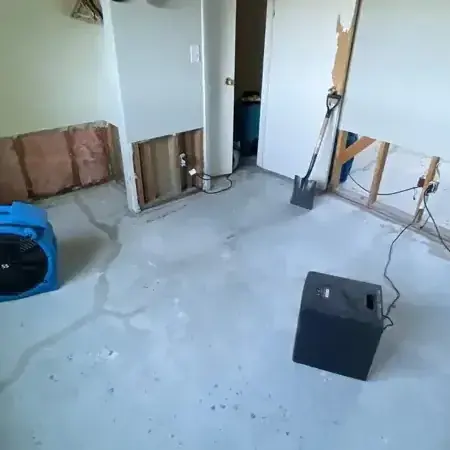
Drying wall by wall
Open
Baseboards come off and small holes or sections of drywall are opened so air can reach the cavity. Wet insulation is removed because it cannot dry in place.
Opening only the wet sections keeps the repair small and the home livable during the work.
Dry
Air movers and dehumidifiers run while the team takes moisture readings on each wall. Structural drying is complete when wood and drywall read the same as dry areas.
- One wall at a time, starting with the wettest
- Readings taken each day until they match dry areas
- Equipment adjusted as walls dry
Close
Once the readings are normal, new insulation and drywall go back. Fixing the entry point comes before closing the wall, or the same storm will return the water.
When the roof is involved too
Wind that drives rain into walls can also lift roof edges and flashing. A wet attic or a ceiling stain points to the roof.
Roof leak water damage covers wet attic insulation and decking after a long rain. The walls and the roof can be wet at the same time, so the whole shell is checked.
A ceiling that stains only during wind and rain often points to wind driven water rather than a worn roof. A spreading stain is handled under ceiling leak water damage.
After the storm: checks and repairs
Quick checks
A few checks after a windstorm can catch a problem early, from Old Town and Haller City to Smokey Point and Crown Ridge.
- Walk around the house and look at windows, siding seams and vents
- Check the attic and the ceilings for stains
- Touch the bases of exterior walls for cool or damp drywall
- Photograph any water marks before they dry
- Call for help before wet insulation sits through another storm
Repairs that stop the next leak
Drying only helps if the entry point is fixed. These repairs are the usual ones.
- Resealing window and door frames
- Replacing failed flashing and lifted trim
- Closing gaps and splits in siding
- Fitting or replacing vent covers
- Checking the roof edge for lifted shingles
Questions
Why does rain come through the wall in a windstorm?
Wind presses rain against siding, window frames and trim, so water finds gaps that stay dry in ordinary rain.
Can a wall be wet when the drywall looks fine?
Yes. Insulation holds water inside the cavity, and the surface may look normal while the wall stays wet.
How is a wet wall dried?
The team opens the cavity, removes wet insulation and runs air movers and dehumidifiers until moisture readings match dry areas.
Should the entry point be fixed before the wall is closed?
Yes. If the opening is not sealed first, the next storm sends water back into the new insulation and drywall.
Does a wall leak also mean a roof leak?
Not always, but wind can lift roof edges and flashing too, so the attic and ceilings are checked as well.