Crawl Space Water Cleanup in Arlington, WA
Most homes here sit over a vented crawl space, and water that collects under the floor soaks insulation and joists out of sight. The extraction crew pumps it out and the drying team dries the floor system.
(888) 509-1696Get water out from under the house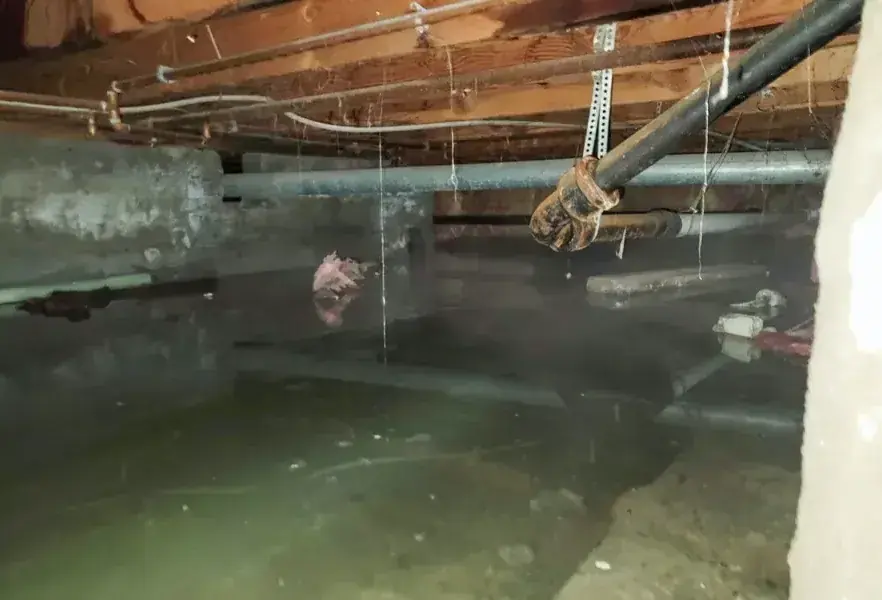 Arlington, WA
The crawl space water cleanup process, step by step
Meters and a thermal camera come out before the fans do, so the plan follows the water instead of guesses. The drying team pulls equipment only when the readings match a dry reference.
- 1
Pump the low points
Portable pumps and extractors pull standing water off the vapor barrier.
- 2
Strip what cannot dry
Wet insulation and a soaked vapor barrier come out and get bagged.
- 3
Dry the floor system
LGR dehumidifiers and air movers run along the joist bays with the vents closed.
- 4
Verify and record
Joist and subfloor readings are logged daily until they reach the drying goal.
Water under a house is easy to miss and slow to leave. A musty smell, cupping floors or a sagging batt of insulation is often the first sign, and by then the vapor barrier may be holding several inches of water against the joists and the subfloor above.
What does crawl space water cleanup cost in Arlington, WA?
Crawl space water cleanup typically costs $2,000 to $6,000 for pumping, insulation removal and drying, and $6,000 to $15,000 when the subfloor and rooms above are also wet.
Water under the house only
- Pumping and extraction
- Wet insulation removed
- Joists dried
Floor system and rooms above
- Subfloor and flooring wet
- Rooms above dried too
- Vapor barrier replaced
Sewage or floodwater below
- Category 3 water
- Soil and framing treated
- Containment under the house
Four things move these numbers most: the water category, the square footage, the class of materials and how many hours passed before drying began. The water damage cost calculator narrows the range for your own loss.
Why water collects in crawl spaces here
Most of the year's rain falls between October and March, and the homes built after 1990 across Smokey Point, Gleneagle and the Hilltop nearly all sit on vented crawl spaces. Water reaches them from several directions.
- Downspouts that empty beside the foundation and soil that slopes toward the house.
- Supply pipes that split in a hard freeze, see frozen pipe cleanup.
- Leaks from toilets, tubs and appliances that run down through the subfloor.
- High water in the low ground near the river, where floodwater rises from below.
How the extraction crew clears a crawl space
The extraction crew sets portable pumps and extractors at the low points and pulls standing water off the vapor barrier. Wet insulation comes down because it cannot dry in place, and a torn or soaked vapor barrier gets pulled so the soil and framing can dry.
- The tech who does the walkthrough reads every joist and the subfloor with pinless and pin meters.
- The drying team closes the vents during drying and runs LGR dehumidifiers with air movers aimed along the joist bays.
- When the source was sewage or floodwater, the crew treats the soil and framing with an EPA-registered antimicrobial.
Keeping the crawl space dry afterward
Once readings meet the drying goal, the fixes that matter most are drainage and the vapor barrier. WSU Extension publishes homeowner material on moisture and drainage, and the EPA indoor air quality pages explain why damp crawl spaces affect the air upstairs. The crawl space water risk check scores your own home in a minute.
Crawl space water cleanup across the Stillaguamish valley
Crews cover ZIP 98223 from Old Town and Haller City to Smokey Point, Gleneagle, Kent Prairie, the Hilltop and the farm roads around Island Crossing, along I-5, SR 9 and SR 530.
Nearby coverage reaches Arlington Heights, Marysville, Lake Stevens, Stanwood, Granite Falls, Oso, Bryant, Silvana and Darrington up the river valley.
Other water problems the same crews handle
Crawl Space Water Cleanup: common questions
Is a little water in the crawl space normal?
No. Standing water raises humidity under the floor, soaks insulation and wets the joists. Even a shallow puddle after a storm deserves a look.
Does wet insulation have to come out?
Yes, in almost every case. Fiberglass batts hold water against the subfloor and sag, so the crew removes and bags them.
Why close the vents during drying?
Damp outdoor air in the wet season slows drying. Closing the vents lets the dehumidifiers dry a sealed space faster.
How long does a crawl space take to dry?
Usually three to seven days after the water is out. Soaked joists and cold weather can add time.
Can mold start under the house?
Yes. Wet wood and insulation can start growth within 24 to 48 hours, which is why drying starts as soon as the water is out.
Is crawl space water covered by insurance?
Water from a sudden pipe break is often covered, while groundwater and flooding are treated differently. Coverage depends on your policy, so check with your own insurer.
Water in the crawl space? Get it pumped out today.
The extraction crew clears the water and the drying team dries the joists and subfloor to the readings.
(888) 509-1696Clear the water under the floorArlington Water Damage Restoration
Arlington, WA · Snohomish County
(888) 509-1696 · nights and weekends too