Sewage Backup Cleanup in Arlington, WA
A sewer or septic backup is Category 3 water the moment it enters the house. The cleanup crew contains the area, removes what it soaked and disinfects every surface before drying begins.
(888) 509-1696Call for sewage cleanup now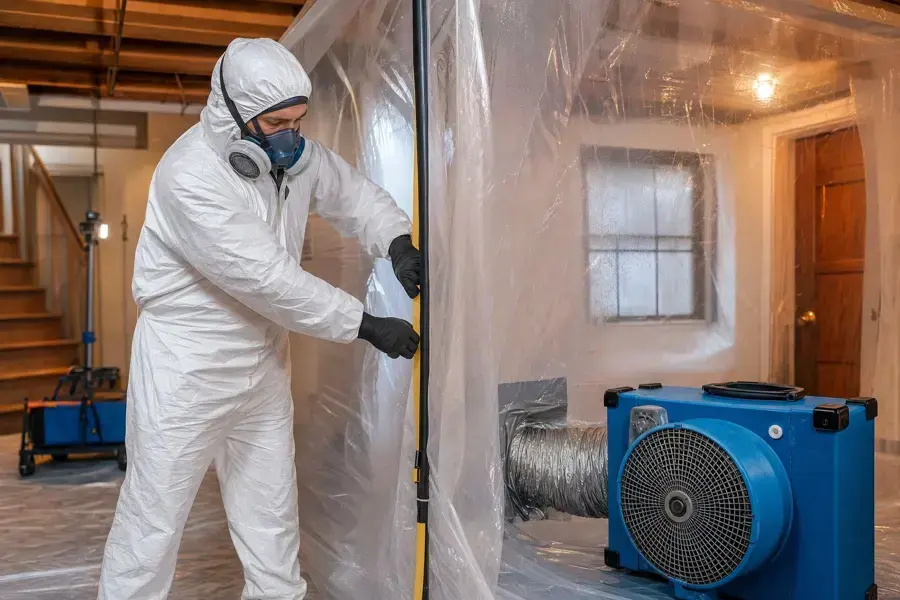 Arlington, WA
The sewage backup cleanup process, step by step
Meters and a thermal camera come out before the fans do, so the plan follows the water instead of guesses. The drying team pulls equipment only when the readings match a dry reference.
- 1
Contain
Plastic barriers and HEPA air scrubbers keep contaminated air in the work zone.
- 2
Remove
Sewage, solids and porous materials it touched are extracted, bagged and hauled.
- 3
Clean and treat
Surfaces get cleaned and an EPA-registered antimicrobial at its dwell time.
- 4
Dry and verify
Equipment runs until readings meet the drying goal.
Sewage carries bacteria and viruses, so a backup is never a mop-and-fan job. The IICRC S500 treats it as Category 3 from the first minute, and the cleanup crew works to that rule: contain, remove, clean, disinfect, then dry.
What does sewage backup cleanup cost in Arlington, WA?
Sewage backup cleanup typically costs $2,500 to $8,000 for a bathroom or laundry area, and $8,000 to $25,000 when sewage spreads across a floor or into the crawl space.
One bathroom or laundry
- Containment set
- Flooring and lower drywall out
- Antimicrobial treatment
Several rooms
- Carpet and pad removed
- Flood cuts
- HEPA air scrubbers
Crawl space included
- Insulation removed
- Soil and joists treated
- Vapor barrier replaced
Four things move these numbers most: the water category, the square footage, the class of materials and how many hours passed before drying began. The water damage cost calculator narrows the range for your own loss.
Where sewage backups start around town
Homes on city sewer in Old Town, Kent Prairie and Smokey Point back up when a side sewer clogs with roots or grease, or when a sewer main downstream blocks. Homes on septic toward Jim Creek and the rural edges back up when a tank fills or a saturated drain field stops taking water in the wet season.
- Root intrusion in older clay or concrete side sewers.
- Grease and wipes that build into a clog at a low fitting.
- Septic tanks overdue for pumping, or drain fields soaked by months of rain.
- River flooding that pushes water back up through floor drains and cleanouts.
How the cleanup crew handles Category 3 water
The cleanup crew wears full protective gear and sets plastic containment with HEPA air scrubbers so contaminated air stays in the work zone. Porous materials the sewage touched come out: carpet, pad, insulation and drywall above the wet mark.
- The crew extracts sewage and solids, then bags and removes affected materials.
- Hard surfaces and framing get cleaned and treated with an EPA-registered antimicrobial at its full dwell time.
- The drying team sets air movers and LGR dehumidifiers only after cleaning ends.
- Crawl spaces under the affected rooms get the same treatment, see crawl space water cleanup.
Septic systems and prevention
The EPA septic system pages explain pumping schedules and drain field care, and the Washington State Department of Health covers on-site sewage systems in the state. A plumber or septic contractor clears the blockage; the cleanup crew handles everything the sewage reached.
Sewage backup cleanup across the Stillaguamish valley
Crews cover ZIP 98223 from Old Town and Haller City to Smokey Point, Gleneagle, Kent Prairie, the Hilltop and the farm roads around Island Crossing, along I-5, SR 9 and SR 530.
Nearby coverage reaches Arlington Heights, Marysville, Lake Stevens, Stanwood, Granite Falls, Oso, Bryant, Silvana and Darrington up the river valley.
Other water problems the same crews handle
Sewage Backup Cleanup: common questions
Can carpet be cleaned after a sewage backup?
No. Carpet and pad that soaked up sewage are Category 3 materials and come out. Hard flooring can often be cleaned and kept.
Is it safe to stay in the house?
Keep everyone out of the affected rooms, especially children, older adults and anyone with a weak immune system, until cleaning ends.
Why does a septic system back up in winter?
Months of rain saturate the drain field, so it cannot take more water and the system backs up into the lowest drain.
What does an antimicrobial do?
An EPA-registered antimicrobial kills bacteria on cleaned surfaces when it stays wet for its full dwell time.
How long does sewage cleanup take?
Removal and cleaning usually take one to two days, then drying adds three to five days.
Does insurance cover sewage backup?
Many policies need a separate sewer backup endorsement. Coverage depends on your policy, so check with your own insurer.
Sewer backup at home? Call for cleanup now.
The cleanup crew contains the area, removes what the sewage touched and disinfects before drying.
(888) 509-1696Get the sewage spill containedArlington Water Damage Restoration
Arlington, WA · Snohomish County
(888) 509-1696 · nights and weekends too