Structural Drying and Dehumidification in Arlington, WA
Surfaces dry in a day; framing, subfloor and joists do not. The drying team sizes air movers and dehumidifiers to each room and keeps them running until every material reads dry.
(888) 509-1696Call to start structural drying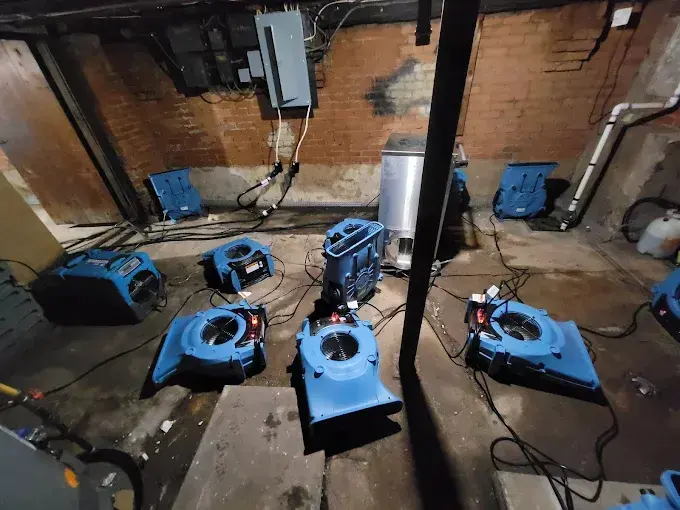 Arlington, WA
The structural drying and dehumidification process, step by step
Meters and a thermal camera come out before the fans do, so the plan follows the water instead of guesses. The drying team pulls equipment only when the readings match a dry reference.
- 1
Set the dry reference
Readings from unaffected materials set the target.
- 2
Size the equipment
Air movers and dehumidifiers match each room's class of loss.
- 3
Log daily
Temperature, humidity and moisture readings get recorded every day.
- 4
Pull on the numbers
Equipment leaves when materials sit within 2 to 4 points of the reference.
Structural drying is the part of a water job that decides whether problems come back. Framing, subfloor sheathing, joists and hardwood hold water long after the surface feels dry, and the drying team works until readings, not looks, say the job is done.
What does structural drying and dehumidification cost in Arlington, WA?
Structural drying typically costs $1,200 to $8,000, depending on the class of loss, how many rooms need equipment and how many days the drying runs.
One or two rooms
- Air movers and LGR
- Three to five days
- Daily readings
Several rooms or a crawl space
- More equipment
- Crawl space setup
- Psychrometric logs
Hardwood or Class 4
- Desiccant dehumidifiers
- Floor drying mats
- Extended drying
Four things move these numbers most: the water category, the square footage, the class of materials and how many hours passed before drying began. The water damage cost calculator narrows the range for your own loss.
Drying in a damp climate
From fall through spring the outside air here is cool and damp, so opening windows does little. The drying team closes the work area and controls the air inside it instead.
- LGR dehumidifiers pull water from the air even in cool rooms and crawl spaces.
- Desiccant dehumidifiers dry dense materials such as hardwood, soaked joists and concrete.
- Air movers sit at angles that sweep wet surfaces, sized to the room's evaporation load.
- Floor mats and injection systems dry hardwood and wall cavities without tearing them out.
How readings decide when equipment leaves
The tech who does the walkthrough sets a dry reference: a reading from the same material in an unaffected part of the house. The drying team logs temperature, humidity and moisture readings every day, and the job is finished when wet materials sit within 2 to 4 points of that reference.
- Psychrometric logs show the air is drying, not just the surfaces.
- Pin and pinless meters track framing, subfloor and drywall separately.
- The final readings go into the claim file with the photos.
The standard behind the work
The IICRC S500 sets the drying procedures; the EPA indoor air quality pages explain why lingering moisture matters for the air in a home, and WSU Extension publishes material on moisture in Pacific Northwest homes. Structural drying follows every water extraction job.
Structural drying and dehumidification across the Stillaguamish valley
Crews cover ZIP 98223 from Old Town and Haller City to Smokey Point, Gleneagle, Kent Prairie, the Hilltop and the farm roads around Island Crossing, along I-5, SR 9 and SR 530.
Nearby coverage reaches Arlington Heights, Marysville, Lake Stevens, Stanwood, Granite Falls, Oso, Bryant, Silvana and Darrington up the river valley.
Other water problems the same crews handle
Structural Drying and Dehumidification: common questions
Why does equipment stay after things feel dry?
Framing and subfloor hold water after surfaces feel dry. The readings decide when drying is finished.
What is an LGR dehumidifier?
A low grain refrigerant dehumidifier that keeps pulling water from the air at lower humidity levels than a household unit.
When is a desiccant dehumidifier used?
For dense materials like hardwood, soaked joists and concrete, and for cold spaces where refrigerant units slow down.
Can hardwood floors be saved?
Often, when drying starts early. Floor drying mats pull water up through the boards before they cup for good.
How long does structural drying take?
Most losses dry in three to seven days. Class 4 materials take longer.
Is the noise and power use normal?
Yes. Air movers and dehumidifiers run around the clock, and the claim file notes the equipment used.
Walls or floors still wet? Start drying now.
The drying team sets equipment to the class of loss and logs readings daily until materials read dry.
(888) 509-1696Start the structural dryingArlington Water Damage Restoration
Arlington, WA · Snohomish County
(888) 509-1696 · nights and weekends too