
Rain stops, but the water around Lake Stevens does not. The lake has a single outlet, a ditched channel beside Hartford Drive, and when the lake is high that channel cannot clear it quickly. The result is wet ground, a spilling road and water that finds its way into yards and low rooms. This post explains why low ground stays wet and what extraction and drying look like when it reaches a house.
Key takeaways
- The lake has one outlet, a ditched channel beside Hartford Drive that flows into Catherine Creek and then the Pilchuck River.
- Rain saturates the ground around the lake, so the lake can stay high or keep rising for days after the rain stops.
- Repeated winter flooding along Hartford Drive led residents to petition the mayor in 2020, and the city built a sandbag wall there in January 2021.
- In November 2021 record rainfall made the outlet channel spill over the road, even after the city dredged the channel that fall.
- Standing water is pumped out first, then wet materials come out and the structure is dried to moisture readings.
How the lake drains, and why that matters
A lake that large needs a way out, and this one has only one. Understanding that outlet explains most of the wet winters around it.
One outlet for the whole lake
The outlet is a ditched channel beside Hartford Drive. It flows into Catherine Creek and then the Pilchuck River.
The channel was dug for the Rucker mill, and it was once known as Lower Stevens Creek. Today it is the only way out for the whole lake.
Ground that holds water
Rain soaks the ground around the lake first. The lake can then stay high or keep rising for days after the rain stops, because the ground around it is saturated.
For a homeowner, that means a dry sky is not the end of the problem.
Why winter is the risky season
The city lists winter conditions and storms among its most common hazards. Its hazard page says Lake Stevens has high flood potential in some areas because streams and creeks can overflow from rain and runoff.
City flood planning also covers the Little Pilchuck Creek and Catherine Creek shorelines, so the outlet is not the only water to watch.
- Four creeks feed the lake: Stevens Creek, Lundeen Creek, Kokanee Creek and Stitch Creek
- One outlet carries the water out, beside Hartford Drive
- Catherine Creek and the Pilchuck River take it from there
- Winter storms add wind and rain on top of all of it
Hartford Drive flooding and where the city stands
The record so far
Downtown has had repeated winter flooding along Hartford Drive. The record is short enough to follow in order.
- 2020: residents petitioned the mayor about the repeated flooding
- January 2021: the mayor reported lake level and downtown flooding, and the city built a sandbag wall along Hartford Drive
- November 2021: record rainfall made the outlet channel spill over the road, even after the city dredged the channel that fall
- December 2021: replacing an outdated culvert under Hartford Drive was at the top of the city flood project list
Where the city stands now
The Lake Stevens Outlet Restoration Project is designing a restored channel and bridge along Hartford Drive, paid for by an EPA Community Grant.
A project in design does not change what a wet winter does this season. Owners near low ground still plan for water.
When wet ground becomes water in the house
Water follows the lowest path. That usually means garage floors, door thresholds, window wells and any room that sits below the yard.
Water from a flooded road or yard also carries mud and runoff, so it is not the clean water of a leaking pipe. Cleanup may need flood water cleanup steps rather than a simple pump out.
- Water at a garage door or a back door threshold
- Damp carpet along an exterior wall
- Baseboards that darken or lift
- Water that returns after every heavy rain
What the water does once it is inside
Water does not stay where it lands. Drywall acts like a wick and pulls moisture upward from the floor, and carpet pad holds it like a sponge.
Cabinet bases, door casings and baseboards soak from below. By the time a stain shows on a wall, the water has usually moved further than it looks.
- Drywall that feels cool or soft near the floor
- Cabinet bases that swell or lose their finish
- Door casings that darken or split
- Carpet that squishes underfoot
What extraction and drying involve
Pumping first
Standing water comes out before anything else. Water extraction uses pumps and extractors to clear floors, garages and any low space.
Pumping early limits how far the water climbs into drywall and cabinet bases.
Removing and drying what stayed wet
Wet carpet pad, flooring and the bottom of drywall come out when they cannot be cleaned. Framing and subfloor stay and are dried.
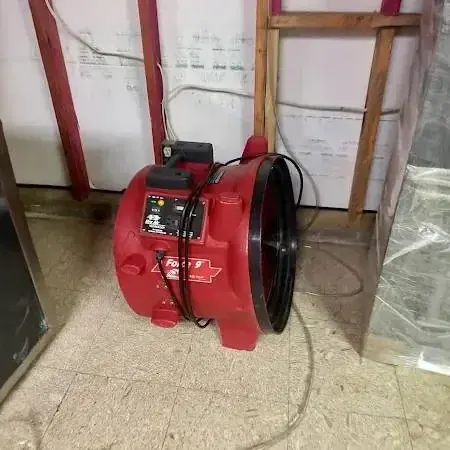
Structural drying then runs air movers and dehumidifiers, with moisture readings taken until the wood and drywall match the dry parts of the house.
- Pumps and extractors for standing water
- Carpet pad and damaged flooring removed
- Drywall cut where it wicked water upward
- Air movers and dehumidifiers until readings are dry
What an owner can do while waiting
A few simple steps limit the spread while the team is on the way. None of them replaces proper drying.
- Lift furniture legs off wet carpet or put foil or plastic under them
- Open interior doors and cabinet doors so air can move
- Take photos of the water level and the damaged items
- Keep electronics and papers off the floor
A plan for wet winters
Homes near low ground do better with a simple routine. None of it needs a contractor.
When water does reach the house, an early call matters, because carpet pad and drywall soak up more the longer they sit wet. A restoration team then matches drying equipment to the rooms that are affected.
Renters can follow the same steps and tell the property manager early. A low unit near the road or the channel is the first place water will show.
- Move stored boxes off garage floors before heavy rain
- Keep gutters and yard drains clear of leaves
- Know where the main water shutoff is
- Photograph damage before anything is moved
Questions
Why does the ground stay wet after the rain stops?
Rain saturates the ground around the lake, and the lake can stay high or keep rising for days after the rain stops. Low ground drains slowly while that is happening.
Is the Hartford Drive outlet being fixed?
The city Lake Stevens Outlet Restoration Project is designing a restored channel and bridge along Hartford Drive, paid for by an EPA Community Grant. Design is not the same as built, so a wet winter can still bring water to the road.
What happened in November 2021?
Record rainfall made the outlet channel spill over the road, even after the city dredged the channel that fall.
Does pumping out a room finish the job?
No. Pumping removes standing water, but wet drywall, subfloor and framing still need drying until moisture readings are normal.
What should be photographed after water reaches the house?
The water level on walls, the rooms affected, damaged flooring and contents, and the point where water came in.
Does a falling lake level mean the house is dry?
No. Wet materials can stay wet long after the water outside drops, so moisture readings decide when the drying is done.