Structural Drying and Dehumidification in Mill Creek
About 47 percent of Mill Creek homes date from 1980 to 1999 and about 38 percent of units sit in buildings of 5 or more, so drying plans account for shared walls.
(888) 509-1696Get drying equipment set up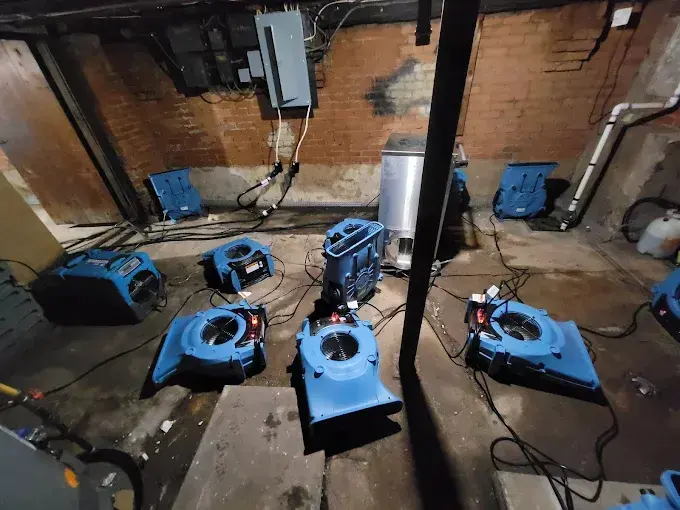 Mill Creek, WA
The structural drying and dehumidification process, step by step
Meters and a thermal camera come out before the fans do, so the plan follows the water instead of guesses. The drying team pulls equipment only when the readings match a dry reference.
- 1
Measure first
Meters and a thermal camera record the starting moisture.
- 2
Set the equipment
Air movers and dehumidifiers go where the moisture map shows the most water.
- 3
Check every day
Readings show whether materials are drying and equipment is working.
- 4
Remove at target
Equipment leaves once materials match the dry reference.
Drying starts after the water is out and the wet materials are removed. It uses airflow and dehumidification to move moisture from framing, subfloor and drywall into the air and out of the house, one measured day at a time.
What does structural drying and dehumidification cost in Mill Creek, WA?
Drying cost depends on how many rooms hold equipment and for how many days. Hardwood, thick framing and large crawl spaces take longer and need more machines.
Small area
- A few air movers
- One dehumidifier
- Several drying days
Several rooms or a crawl space
- More equipment running
- Crawl space setup
- Psychrometric logs
Hardwood or Class 4
- Desiccant dehumidifiers
- Floor drying mats
- Longer drying
Four things move these numbers most: the water category, the square footage, the class of materials and how many hours passed before drying began. The water damage cost calculator narrows the range for your own loss.
Drying in homes with shared walls
About 4,331 Mill Creek homes, roughly 47 percent, were built from 1980 to 1999, and 3,548 housing units are in buildings of 5 or more units. Shared floors and walls mean drying equipment often has to cover more than one room, and sometimes an adjoining unit.
- Air movers set to push dry air across wet walls and floors
- LGR dehumidifiers pull moisture from the air so it cannot resettle
- Moisture meters and a thermal camera track each wet surface daily
- Equipment moved or removed as readings show a material is dry
What the daily readings show
Each visit records temperature, humidity and the moisture content of the wettest materials. Those psychrometric logs show whether the dehumidifiers are keeping up, and they tell the crew when to move air movers or add equipment. The same logs go to the adjuster.
- Hardwood floors may need drying mats and extra days to avoid cupping
- Thick framing and plaster dry far more slowly than thin drywall does
- Dense Class 4 materials such as concrete or stone need desiccant dehumidifiers
When drying is complete
Equipment comes out only after every monitored material reaches the dry reference taken in an unaffected room. If water was dirty, see sewage backup cleanup, and for the first step after a leak see water extraction.
Structural drying and dehumidification here and in nearby towns
Crews serve ZIP 98012, including Country Club Estates, Mill Run, The Parks, Cypress and Cottonwood, plus townhome, condominium and apartment buildings where drying equipment may have to cover a shared wall.
The same service nearby: structural drying and dehumidification in Arlington, Lynnwood, Mukilteo.
Related water damage services in Mill Creek
Structural Drying and Dehumidification: common questions
How long does drying usually take?
Three to five days is common for clean water in one or two rooms, and longer for hardwood or dirty water.
Why is it so loud and warm?
Air movers and dehumidifiers run all day, and dehumidifiers add heat. Noise and warmth mean moisture is leaving.
Can the equipment be turned off at night?
It should run continuously, because stopping lets moisture settle back into materials and stretches the job.
How does drying work in a townhome or condo?
The crew reads shared walls, floors and ceilings and may place equipment on both sides, with the neighbor's access affecting the schedule.
What is a dry standard?
A reference reading taken from an unaffected part of the same house, matched against each wet material before equipment is removed.
Does electricity use go up during drying?
Yes, because the machines run continuously. The adjuster may ask for equipment logs, which the crew records each day.
Walls and floors still damp?
A crew can map the moisture, place the equipment and set a daily reading schedule that ends at target.
(888) 509-1696Start the drying setupArlington Water Damage Restoration
Arlington, WA · Snohomish County
(888) 509-1696 · nights and weekends too