A sewage backup in a Mill Creek home brings two questions at once. How is the mess cleaned safely, and which agency should hear about the sewer problem? Wastewater service here comes from two separate districts, so the second question has more than one answer. This post covers both.
Key takeaways
- Water and wastewater service in Mill Creek comes from two separate districts, the Alderwood Water & Wastewater District and the Silver Lake Water & Sewer District.
- This post does not say which district serves any street, so confirm the right one for the property before calling.
- The Alderwood district requires a side sewer permit for work on side sewer pipes outside the building, including repairs.
- For a new sewer connection, the Silver Lake district has a contractor build the side sewer to its standards, and the district inspects and approves the work.
- Sewage is Category 3 water, so cleanup removes porous materials and disinfects what stays.
Signs and causes of a sewage backup
Signs to watch for
Most backups announce themselves before they spill. The earlier they are noticed, the smaller the cleanup.
- Gurgling from drains when a toilet is flushed or a washer drains
- Water or sewage coming up in a floor drain, tub or shower
- More than one fixture draining slowly at the same time
- A sewage smell near a drain or in a lower room
Common causes
A backup usually starts with a blockage or a failed pipe, not with the cleanup. Knowing the cause helps decide who needs to fix it.
A plumber or the district can say which one applies. The cleanup crew deals with the water and the damage, not the pipe.
- Grease, wipes and other items that should not go down a drain
- Tree roots that work into a joint in the side sewer
- A cracked or collapsed pipe
- A blockage in the district main, which can affect other homes too
Two districts serve Mill Creek
Who provides service
Water and wastewater service in the city comes from the Alderwood Water & Wastewater District and the Silver Lake Water & Sewer District. They are separate agencies with their own rules.
This post never says which of them serves a particular street or neighborhood, because that is not something to guess.
How to confirm the right one
Check the property records and utility bills, or ask both districts. Do that before arranging pipe work, because the permit and inspection steps differ.
Side sewers, permits and inspections
The side sewer is the pipe that carries wastewater from the building toward the sewer main. The two districts handle work on it differently.
Alderwood district
The Alderwood district requires a side sewer permit for work on side sewer pipes outside the building, and that includes repairs. A contractor who skips the permit can create problems later.
Silver Lake district
For a new sewer connection, the Silver Lake district has the customer hire a contractor to build a side sewer to district standards. The district then inspects and approves the work.
What this post does not decide
Who owns or repairs the pipe beyond the property boundary is not stated here. The district named in the records should settle it.
Keeping the right water in the right drain
The city asks that only rain go down storm drains, and property owners are responsible for operating and maintaining drainage systems on private property. Keeping those systems clear helps, though it cannot prevent every sewer problem.
The same Category 3 steps apply to any sewer backup in the area, as described under sewage cleanup.
What to do right after a backup
The first priority is keeping people away from contaminated water. Speed matters, but so does staying safe.
A local restoration team can start the cleanup while the district question is settled.
- Stop using sinks, tubs, toilets and washers so no more water enters the drain
- Keep kids, pets and anyone with health concerns out of the area
- Do not walk through the wet area barefoot or track it into clean rooms
- Photograph the damage before cleanup starts
- Contact the district that serves the property about the sewer problem
- Do not pour chemical drain cleaners into a drain that is backing up
- Do not use a household vacuum on sewage
How the cleanup is done
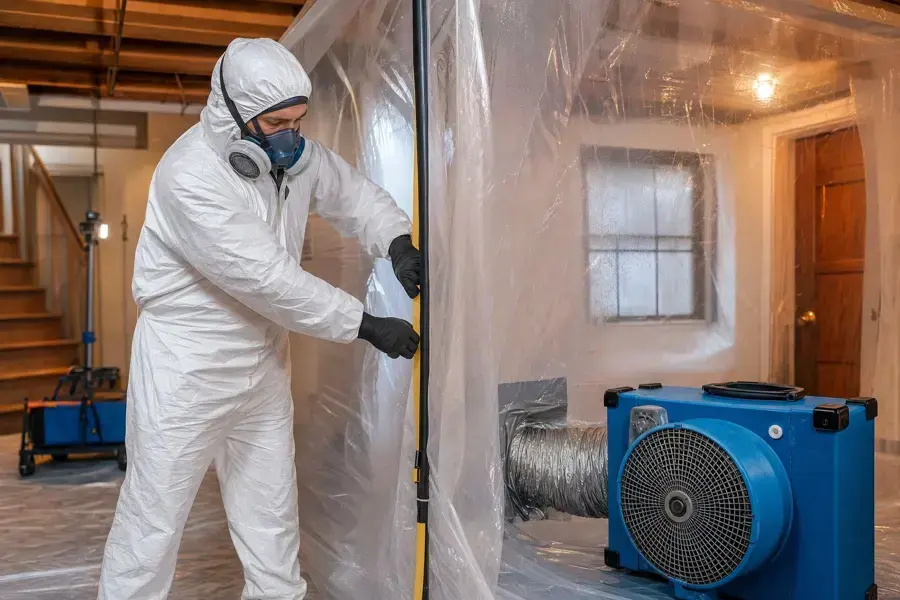
A sewage backup is Category 3 water. Sewage backup cleanup starts with containment so the contamination does not spread to dry rooms.
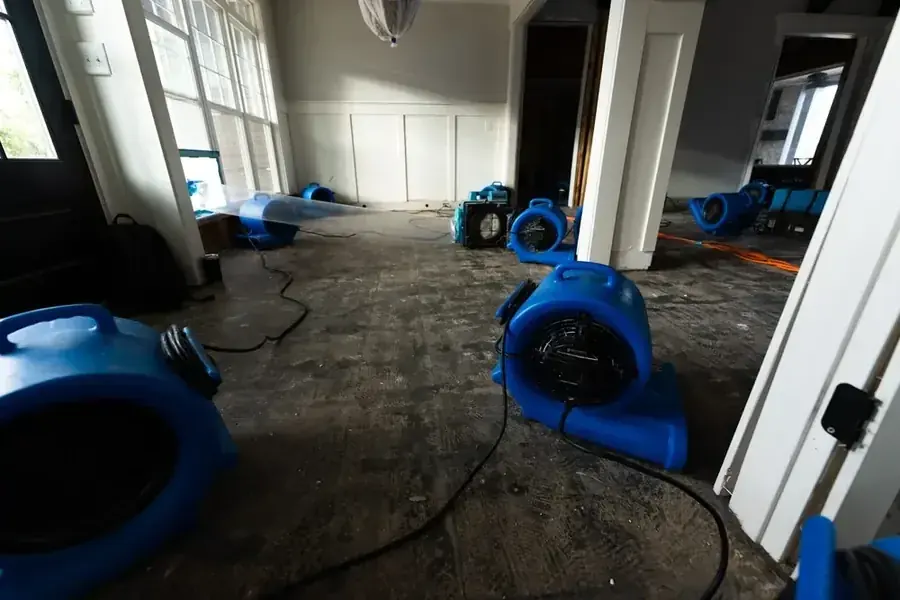
Then water extraction removes the liquid. Carpet, pad and other porous materials that touched sewage are taken out, because they cannot be made safe.
Hard surfaces and framing are cleaned, treated with an antimicrobial product and dried. Moisture readings confirm when the work is done.
Why containment comes first
Sewage spreads on shoes, tools and air movement, so the crew seals off the work area before anything is removed.
- Plastic barriers over doorways and openings
- Air scrubbers with HEPA filters when the work calls for them
- One path in and out of the area
- Protective suits, gloves and boots for the crew
What the crew removes
Anything porous that touched sewage cannot be made safe, so it goes.
- Carpet and carpet pad
- Insulation and the lower part of wet drywall
- Cardboard, fabric and other stored items on the floor
- Soaked cabinet toe kicks and baseboards
What stays and is treated
Hard surfaces and framing are cleaned and treated with an antimicrobial product, then dried with structural drying until moisture readings are normal.
- Concrete, tile and sealed floors
- Framing lumber and subfloor
- Cabinet frames that can be cleaned and dried
Backups in condos, townhomes and apartments
About 3,548 homes here are in buildings of 5 or more units, and about 41 percent of occupied homes are rented.
In those buildings a backup can reach several units, so renters and owners should tell the property manager or association right away and keep damage records.
- Tell the property manager or association at once
- Keep out of shared hallways and laundry rooms that are wet
- Photograph each affected unit
- Ask who is arranging the sewer repair
Questions
Which district serves my Mill Creek home?
Two districts serve Mill Creek, the Alderwood Water & Wastewater District and the Silver Lake Water & Sewer District. Confirm the right one through the property records, utility bills or by asking both.
Does a side sewer repair need a permit?
The Alderwood district requires a side sewer permit for work on side sewer pipes outside the building, including repairs. For a new sewer connection, the Silver Lake district has a contractor build the side sewer to its standards, and the district inspects and approves the work.
Is sewage backup water dangerous?
Yes. It is Category 3 water, which can carry harmful bacteria, so porous materials that touched it are removed and the rest is disinfected.
Should anything be done before the cleanup crew starts?
Stop using water in the building, keep people out of the wet area and photograph the damage. Do not try to dry or save porous materials that touched sewage.
What if the home is a condo or townhome?
Tell the property manager or association right away, keep out of wet shared areas and photograph each affected unit. A backup in a multi unit building can reach more than one home.
Can a homeowner clean up sewage alone?
Small amounts on a hard floor can be handled with care, but anything that soaked carpet, drywall or insulation needs trained crews because those materials cannot be made safe.