Downtown Mount Vernon sits beside the Skagit River, and the flood wall keeps the river out of the historic business district. That is a real protection, but it covers one kind of water. This post separates what the wall does from what it cannot stop inside a storefront, and lays out a first day plan for a business owner.
Key takeaways
- The downtown flood wall, completed in 2018, protects the historic business district and the waterfront plaza from the Skagit River.
- On December 12, 2025 the Skagit River crested at a record 37.73 feet in Mount Vernon and the flood wall held.
- The city says severe storms are its most common natural disaster and flooding is second, so storm water and plumbing still matter.
- A wall cannot stop a burst pipe, a roof leak, a drain backup or sewage inside a building.
- On day one, stop the source, protect stock and records, and ask for phased drying so part of the space can reopen.
What the Mount Vernon flood wall does
Downtown borders the Skagit River and has flooded repeatedly through the city history. Major floods in 1892 and 1894 led to a levee system, and the flood wall completed in 2018 now protects the historic business district and the waterfront plaza.
- November 2021: the Skagit crested just shy of the 1990 record, and the flood wall kept downtown dry
- December 12, 2025: a record crest of 37.73 feet, and the flood wall held
- The wall guards against the river, not against water that starts inside or above a building
Downtown is more than one kind of business
The Historic Lincoln Theatre, the Library Commons and the riverside shopping district all sit downtown, along with cafes, offices and shops. Each loses water in a different way.
- Restaurants and cafes: dishwashers, ice machines, kitchen drains and restroom overflows
- Retail shops: roof leaks that drop onto stock and floor displays
- Offices: ceiling leaks and restroom overflows that reach equipment and records
- Upper floor tenants: leaks that travel down through the building to the unit below
What a river wall cannot stop
A storefront can take on water from several directions at once. The river is only one of them.
Water from inside the building
Burst pipes, failed water heaters, dishwasher hoses and restroom overflows can release a lot of water in a short time. In a shared building, that water also drops into the unit below.
That kind of loss is handled under burst pipe water damage work.
Water from the sky
The city names severe storms as its most common natural disaster. Wind and rain find roof edges, flashing, skylights and rooftop equipment.
Wind driven rain and roof loss fall under storm water damage.
Water from the street and the drains
The city storm drain system carries street rainwater to ponds, wetlands, creeks, the Skagit River and Puget Sound. During a heavy storm, drains and low doorways are where street water can reach a shop.
Separately, sewage can back up through floor drains and restrooms. That water is contaminated and is handled differently from clean water.
The first day for a business owner
The first day is about stopping damage from growing and keeping a record. Stock, floors and fixtures are all at risk while the water is still moving.
Stop the source
Shut the water at the main or at the fixture. If the water is near electrical equipment, keep staff out and shut off power only if the panel is dry and safe to reach.
Protect stock and records
Lift stock and paper records off the floor and away from wet walls. Move electronics and cash handling equipment to a dry place.
- Photograph the damage before anything is moved
- Keep a list of damaged stock and equipment
- Cover shelves and counters that stay in the wet area
Tell the people who need to know
Landlords, neighboring tenants and staff should hear about the loss early. A leak in a shared wall rarely stays on one side.
Keep customers and staff informed
A short notice on the door and a message to staff and suppliers prevents confusion. Say which areas are closed and when an update is coming, without promising a reopening date before the readings are known.
How cleanup is phased in a working storefront
Phasing the work
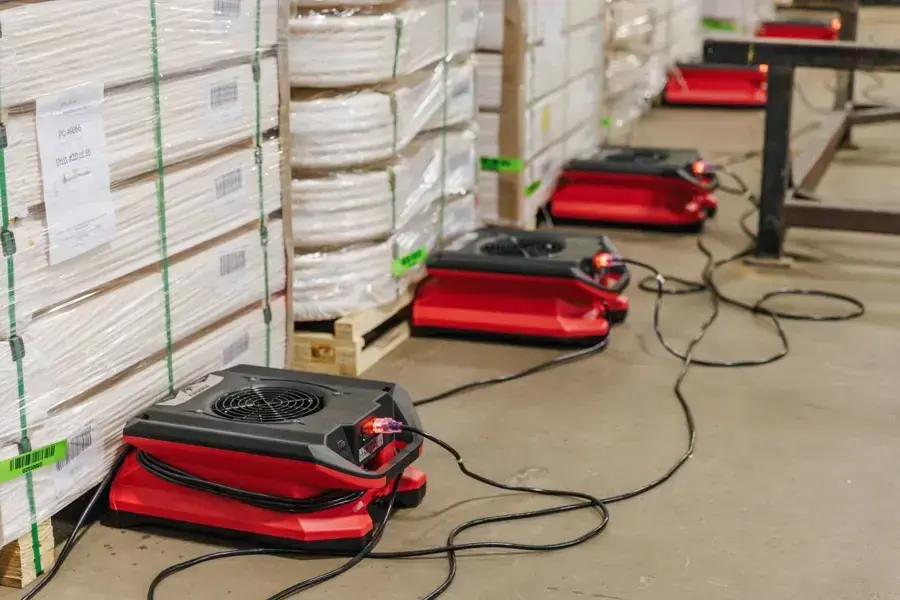
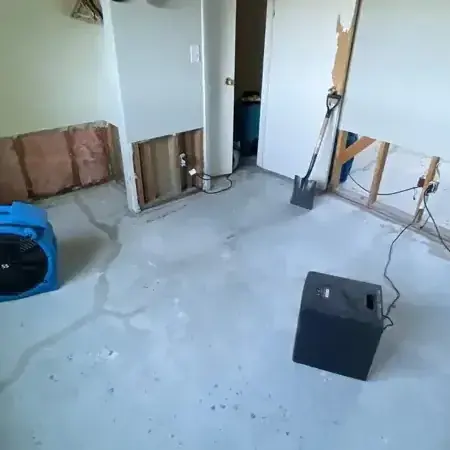
Commercial water damage work is usually phased. The team sets up containment, clears the wettest zone first and dries the shared walls and floors in stages.
That lets part of the space come back into use before the whole building is dry. Drying is judged by moisture readings, not by how the floor looks.
- Water is pumped or extracted from the wettest areas first
- Wet flooring, ceiling tiles and wall bases come out where they cannot be dried
- Containment keeps dust and damp air away from dry stock rooms
- Air movers and dehumidifiers run until readings are normal
Why shared walls change the plan
Where storefronts share walls, floors or ceilings, water in one unit rarely stays in that unit. The neighbor next door may have wet drywall without knowing it.
A good plan checks the shared walls, tells the neighbor and the landlord, and agrees where drying equipment can run. That keeps a small loss from turning into a dispute.
When the water came from outside
The city says a significant portion of town lies in the 100 year floodplain. If river water, street water or storm drain water reaches a building, it is treated as heavily contaminated.
River and flood water cleanup removes porous materials that touched that water, then cleans and treats what stays. After that, structural drying finishes the job.
Water from the river, the street or the storm drains carries silt, fuel and bacteria. A shop that took on that water needs a different plan from a shop with a clean pipe leak.
- Stock that touched the water is assessed item by item
- Porous finishes such as carpet, ceiling tiles and wall insulation are removed
- Hard floors and framing are cleaned, treated and dried
A short checklist before the next storm
A little preparation takes the sting out of a loss. These steps are simple.
- Know where the main water shutoff and the electrical panel are
- Keep stock and records off the floor in back rooms
- Check roof drains and gutters before the wet season
- Keep a current list of equipment and stock
Questions
Does the flood wall protect a storefront from every kind of water?
No. The wall guards the historic business district from the Skagit River. Pipes, roofs, drains and sewage can still send water into a building.
When was the flood wall completed?
The downtown flood wall was completed in 2018.
How high did the Skagit River get in December 2025?
On December 12, 2025 the river crested at a record 37.73 feet in Mount Vernon, and the flood wall held.
Can part of a shop reopen while drying continues?
Often yes. Phased drying clears the wettest zone first and uses containment, so dry areas can stay in use.
What is the first thing to do after a pipe breaks in a shop?
Stop the water at the main or the fixture, keep people away from wet electrical equipment and photograph the damage before moving anything.
Does a storefront near the river still need flood preparation?
The city says a significant portion of town lies in the 100 year floodplain. Its Development Services Department gives property owners copies of elevation certificates on request, which helps when planning for river water.